Yes, you are also religious
Humans’ evolutionary drive to worship is not unique to churchgoers
Every person, whether they acknowledge it or not, lives by a set of foundational commitments that cannot themselves be justified by logic or empirical evidence alone. These include beliefs about what makes a life meaningful, what human beings owe one another, and what is ultimately worth pursuing. Call these commitments what you like: moral axioms, metaphysical presuppositions, or a worldview. The point is that they are prior to the argument. You cannot derive “human dignity matters” from a telescope or a syllogism. You presuppose it, and then you reason outward from there.
This is precisely what has historically distinguished religious belief from mere opinion: not irrationality, but a foundational commitment that orders everything else. When Paul Tillich defined religion as “ultimate concern,” what matters to you unconditionally, he was pointing at a structural feature of human consciousness, not a peculiarity of churchgoers.
On this account, the committed atheist who organizes her life around justice, human flourishing, and the reduction of suffering is not operating without a religion. She is operating with one she has not named. Her foundational claims (that suffering is bad, that persons have inherent worth, that fairness matters) are not conclusions she derived from first principles. They are her first principles.
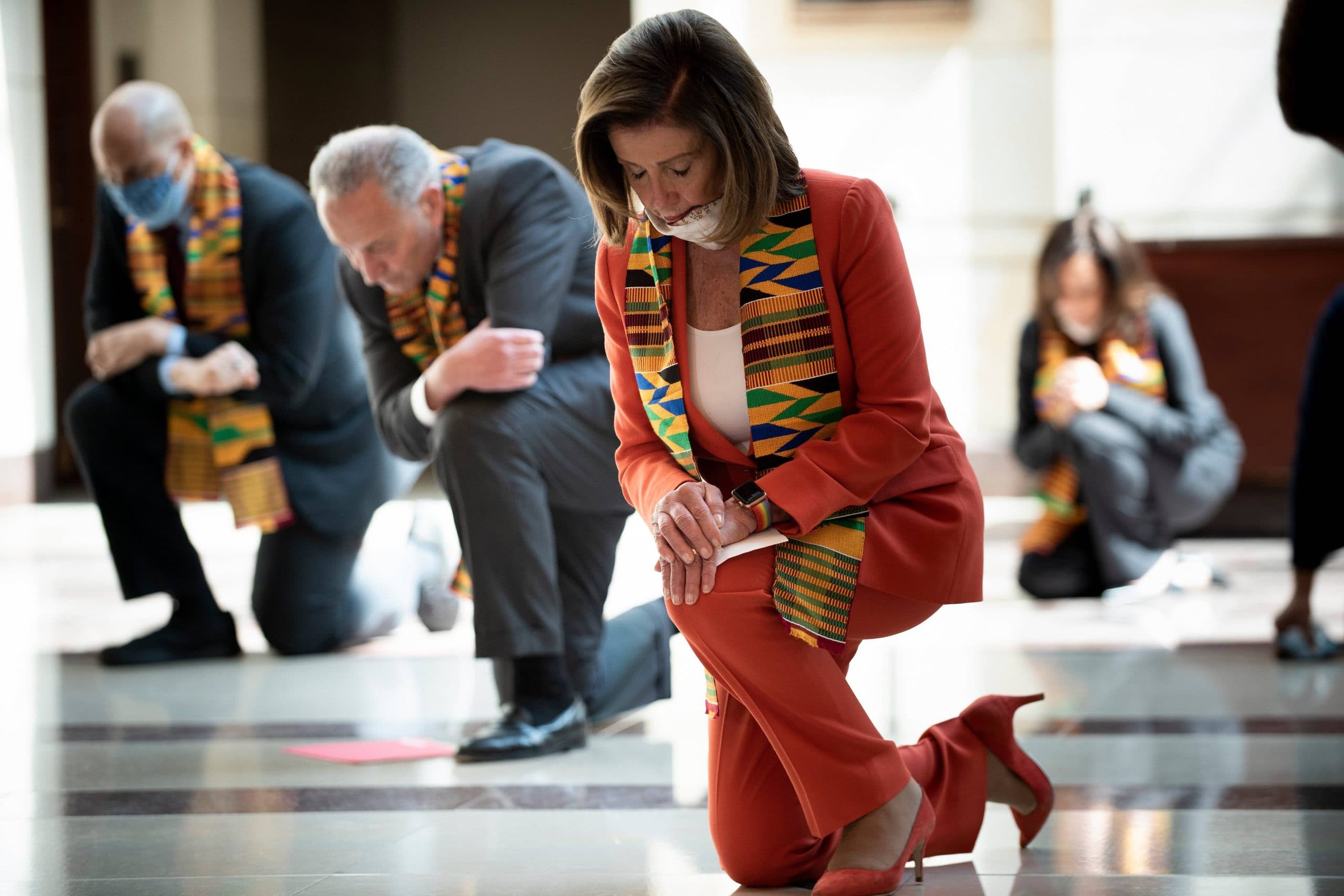
The person displaying political convictions on their porch and the person with religious iconography in their home are, at this structural level, doing the same thing: publicly signaling the moral framework that orders their lives and gives their choices coherence. The frameworks differ enormously in content, origin, and internal logic. But both are expressions of what their holder believes to be true, good, and worthy of allegiance.
To call one of these “religious” and the other merely “political” or “rational” is not a neutral description. It is itself a move within a particular framework, one that privileges secular self-understanding as the default and treats religious commitment as the deviation requiring explanation. The more honest account recognizes that everyone is in the same epistemic position: reasoning outward from premises they did not prove and cannot fully escape.